
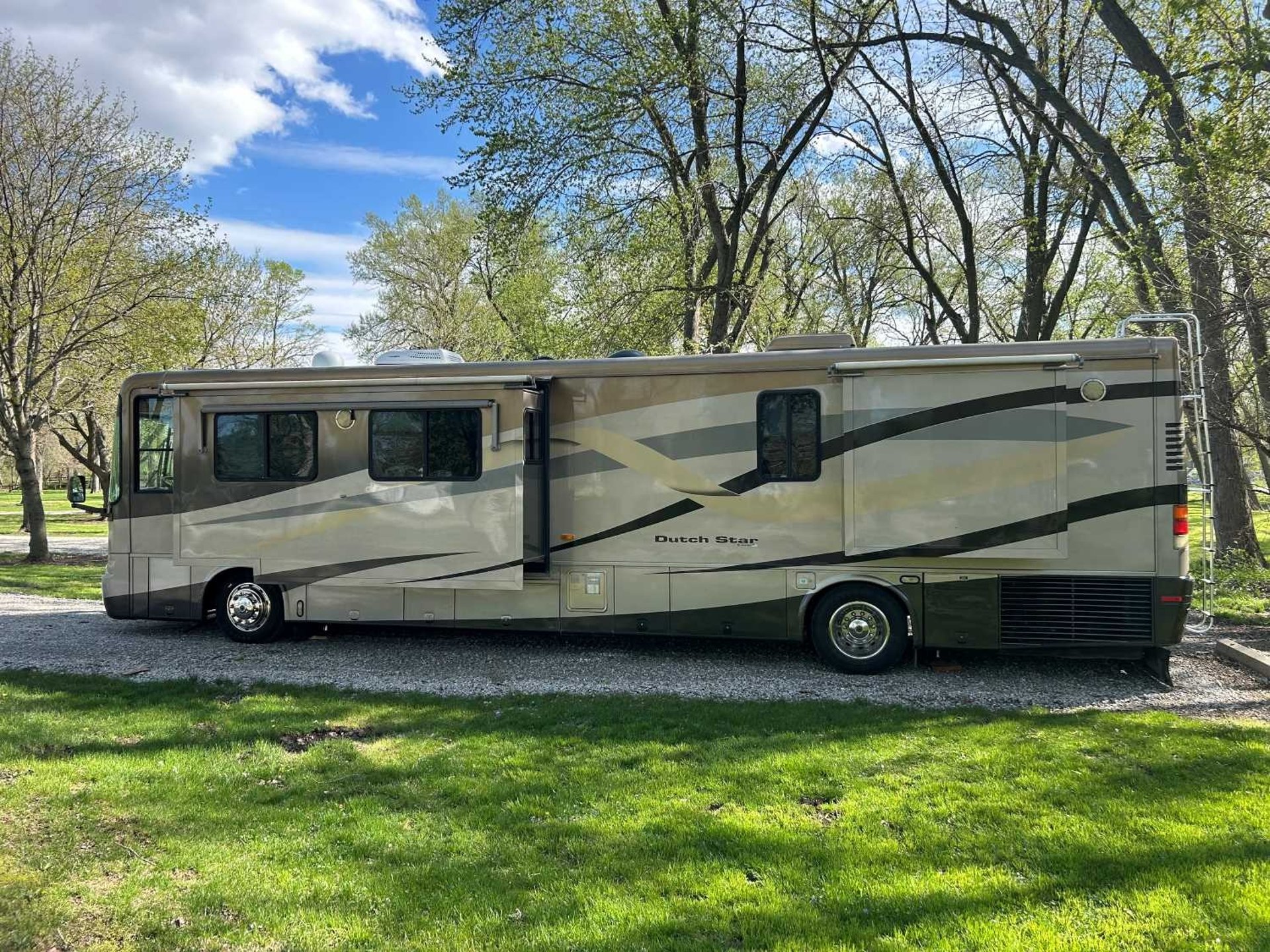
RV Roof Inspection Near Des Moines
Water damage is the single most destructive force in RV ownership, and it almost never announces itself. By the time a ceiling stain appears or a floor feels soft underfoot, the damage has been building for months. Structural rot, delaminated walls, and mold colonies do not develop overnight.
They develop behind finished surfaces where neither an owner nor a casual buyer ever thinks to look. Catching water intrusion early is the difference between a sealant repair and a structural reconstruction.
RV Water Damage Check
Our roof inspection is built around the reality that roof leaks in RVs are rarely visible from inside the coach at the point they begin. A failed seal around a vent, a cracked seam at a roof edge, or a compromised membrane allows water in at the roof level, but that water travels. It runs along structural members, pools in low points, and begins softening substrate materials before it ever migrates to a surface anyone can see. By the time visible symptoms appear, the damage zone is always larger than the entry point.
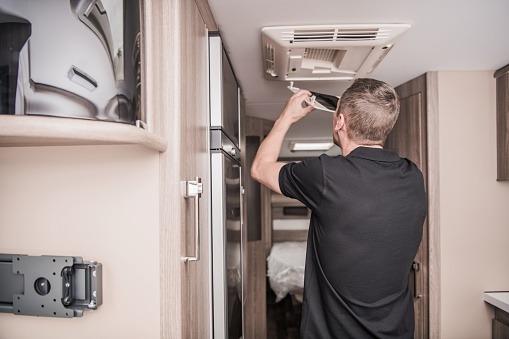
We inspect the full roof surface, including the membrane material, all seams and edges, every caulked penetration, all vent bases, skylight frames, air conditioning unit mounts, and antenna or solar equipment mounts. Each of these is a potential entry point, and each is evaluated for the integrity of its seal and the condition of the substrate material immediately surrounding it.
RV Leak Inspection in Iowa
Iowa's weather creates specific roof stress patterns that we see repeatedly in our inspections. Freeze and thaw cycles during winter put repeated mechanical stress on sealants and membrane materials, opening hairline cracks that are invisible to casual inspection but allow water intrusion every time rain follows a freeze. Spring storms deliver sustained heavy rain that exposes any existing vulnerability. Summer UV exposure degrades sealant compounds and elastomeric roof coatings, accelerating the cycle.
Interior soft spots in the flooring and walls adjacent to the roof line are a primary indicator that we investigate during every roof inspection. We probe suspected soft areas to assess the extent of substrate deterioration beneath finished surfaces. Staining patterns on interior ceilings and walls are mapped against roof features to identify the likely entry point, which is frequently not directly above the stain.
Early Warning Signs Owners Miss
A musty odor that appears after rain and dissipates as the RV dries out is one of the most consistently overlooked signs of active water intrusion. Slightly soft or spongy spots in floors near windows or slides indicate moisture in the substrate. Discoloration or bubbling in wall panels, especially near ceiling level, suggests water migration. Any caulking that has cracked, shrunk away from the surface it is meant to seal, or developed a chalky appearance is no longer performing its function.
The roof inspection report documents every area of concern with specific photos, describes the nature and likely source of any damage found, and provides recommendations for repair that are specific to the conditions identified. Where soft spots or damage are found, the report notes the affected area and our assessment of the depth and extent of the damage based on physical probing and visual examination.
What You Receive
What You Receive
Roof inspection is not only a diagnostic tool. For RV owners who want to stay ahead of the problem, periodic inspection allows sealant replacement and minor repairs to be completed before any water actually enters the structure. Sealants have a finite service life that varies with UV exposure, temperature cycling, and the flexibility demands of an RV in motion. Replacing them on a maintenance schedule rather than a failure schedule is substantially less expensive in every case.

Schedule your pre-purchase
Schedule a roof inspection and stop water damage before it becomes structural damage.
Frequently asked questions
How often should an RV roof be inspected?
Annual inspection is the baseline recommendation. RVs that have experienced extreme weather exposure, those stored outdoors through Iowa winters, and any RV approaching or exceeding ten years of age benefit from inspection every six months.
Can leaks be present without any visible interior signs?
Yes, and this is common in early-stage water intrusion. Water can enter at the roof level and be absorbed by substrate materials for an extended period before any visible staining or softness appears at the finished interior surface.
Do you reseal roofs as part of this service?
The roof inspection identifies conditions and documents findings. Resealing is a separate service. We will note where resealing is recommended and can discuss service options based on what the inspection reveals.
How long does a roof inspection take?
A thorough roof inspection including the exterior surface, all penetrations, and interior indicators typically takes between one and two hours depending on the size and complexity of the RV.
Expert RV inspections for your peace of mind.
Call / Text
Inspections / Servces Request
hawkirv1@gmail.com
515-577-7211
Copyright © 2025 Hawk-I-RV Inspections. All rights reserved.
Hawk-I-RV Inspections & Services